Winters in Mokena, IL are freezing. With temperatures often dropping to 17 degrees Fahrenheit, locals rely heavily on their heaters. While nonstop furnace operation might seem necessary to beat back the chill, it’s actually a sign of trouble. Even when Mokena’s weather is at its worst, your heater should run just 2 to 3 heating cycles per hour. Each of these cycles should last 10 to 20 minutes. Failure to take a break indicates potentially serious furnace issues.
Inaccurate Furnace Sizing
Ensuring accurate sizing is one of the most important steps in furnace installation. When furnaces are too small for their service areas, they run continuously. Undersized furnaces lack sufficient capacity and power. As a result, they wear down faster, and they consistently underperform. If your home furnace has always run nonstop throughout the heating season, there’s a good chance that it’s too small for your home.
Changes to Your Furnace’s Service Area
Sizing issues can also occur after homeowners renovate or add to their properties. When sizing furnaces, HVAC technicians use the Manual J Load Calculation. The Manual J accounts for ceiling heights, window sizes, insulation R-values, household sizes, building layouts, and more. Any significant changes to these or other factors considered in Manual J could affect your home’s heating needs.
Incorrect Thermostat Settings
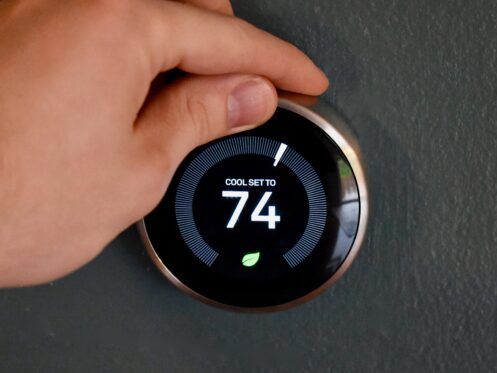
Incorrect thermostat settings are a common and often easy-to-resolve cause of nonstop furnace operation. If your thermostat is set to “ON” rather than “AUTO”, your furnace’s fan motor will run nonstop, but your furnace will never initiate a heating cycle. With the “ON” setting, your HVAC system constantly circulates air but doesn’t change its temperature.
A Malfunctioning Thermostat
Your thermostat acts as the brain of your HVAC system. It reads your home’s temperature and then initiates or ends heating cycles accordingly. If your thermostat can’t accurately read your indoor temperature, it can’t effectively control your furnace’s performance. Your thermostat might have worn sensors, wiring issues, or other age or wear-related faults.
Leaky Air Ducts
Leaky air ducts are another possible cause of continuous furnace operation. Air duct leaks can cause heated air to be deposited in remote or low-lying areas. Heated air could be escaping into your crawlspaces, basement, or attic. If it is, your furnace will take longer to create the temperature set at your thermostat. It will also work harder to maintain it.
A Dirty Furnace Filter
Dirty HVAC air filters lie at the heart of many furnace, heat pump, and AC problems. If your furnace is malfunctioning, this is the first component to check. All air that enters your furnace for heating passes through this component. Thick buildups of lint-like filter debris inhibit airflow. With less air coming in, furnaces have less air to heat and distribute. As a result, they run much longer.
An easy way to determine whether your air filter has reached the end of its lifespan is by holding it up to the light. In theory, when light can no longer pass through filters, air can’t move through them either.
Insufficient Furnace Maintenance
All furnaces need annual maintenance service. Pre-season tune-ups ensure safe, efficient, and all-around reliable furnace performance. If you skipped pre-season tune-up service, your furnace might have dirty burners or buildups on other key components. This debris can inhibit fuel combustion in a gas furnace, resulting in longer, less effective heating cycles. Not only does poor fuel combustion diminish a furnace’s efficiency, but it also increases the risk of carbon monoxide (CO) exposure.
A Faulty Limit Switch
Your furnace’s limit switch prevents overheating by monitoring interior temperatures. When a furnace’s operating temperature rises too high, the limit switch turns off the burners to prevent a fire, permanent failure, and other problems. When limit switches malfunction, furnaces might turn on but won’t turn off. The only way to shut down furnaces with faulty limit switches is to flip their circuit breakers manually.
A Cracked Heat Exchanger
When a gas furnace has a cracked heat exchanger, it produces less heat. Worse still, exhaust gases can enter living spaces. This is another great reason to have your furnace inspected and tuned ahead of the heating season. HVAC technicians can identify heat exchanger problems before they compromise your home’s health and safety. A cracked heat exchanger often indicates the need for furnace replacement.
A Loose, Leaky Home Envelope
Nonstop furnace operation could mean that your home is inefficient. If you have drafts around your windows and doors, insufficient attic insulation, or other air leaks, your furnace might struggle to replace the heat you lose. Even when operating at optimum efficiency, furnaces might run nonstop heating cycles to offset heat loss.
Allegiance Heating & Cooling proudly serves Mokena, IL and the surrounding communities. We’re a factory-authorized Trane dealer, and we maintain a talented team of NATE-certified technicians. We offer expert furnace replacement, maintenance, and repair services, servicing all makes and models. If the furnace in your Mokena home is running nonstop, contact Allegiance Heating & Cooling today!