
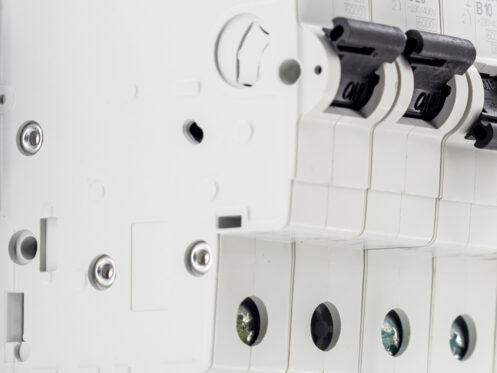
Can you use a Siemens breaker in a Westinghouse panel?
A Siemens breaker should not be installed in a Westinghouse panel unless the panel labeling or a specific UL-classified replacement listing confirms compatibility. Physical fit alone is not enough. A qualified electrician should identify the panel model and approved breaker type before replacement to avoid loose connections, overheating, or code problems.
Why physical fit does not prove compatibility
Circuit breakers must be approved for the specific panel or be listed as a classified replacement for that application. A breaker that snaps into place can still make an unsafe connection with the bus bar. The evaluation should focus on the actual equipment and installation rather than appearance or a single rule of thumb.
For a home or business in Mokena, Illinois, the practical next step is to compare the visible condition, the system’s operating history, and the manufacturer’s instructions. When the work involves electrical, fuel-gas, refrigerant, or combustion components, a qualified professional should make the final determination.
Which replacement breakers may be appropriate
Older Westinghouse, Bryant, and Challenger panel families are often associated with Eaton BR products, but the exact panel label controls the decision. Eaton also makes UL-classified Type CL breakers for certain panels made by other manufacturers. The evaluation should focus on the actual equipment and installation rather than appearance or a single rule of thumb.
For a home or business in Mokena, Illinois, the practical next step is to compare the visible condition, the system’s operating history, and the manufacturer’s instructions. When the work involves electrical, fuel-gas, refrigerant, or combustion components, a qualified professional should make the final determination.
How an electrician verifies the correct breaker
The panel directory, model information, labeling, and breaker listing should all be checked before installation. Replacing a breaker involves energized electrical equipment and should be handled by a qualified electrician. The evaluation should focus on the actual equipment and installation rather than appearance or a single rule of thumb.
For a home or business in Mokena, Illinois, the practical next step is to compare the visible condition, the system’s operating history, and the manufacturer’s instructions. When the work involves electrical, fuel-gas, refrigerant, or combustion components, a qualified professional should make the final determination.
What should you do next?
Start with the least invasive step that safely answers the question. Review labels and instructions, document visible conditions, and avoid taking apart components that require specialized tools or testing. The panel directory, model information, labeling, and breaker listing should all be checked before installation. Replacing a breaker involves energized electrical equipment and should be handled by a qualified electrician.
A professional evaluation should explain what was found, why the recommended work is necessary, and what is included in the scope. Ask whether permits, testing, cleanup, disposal, balancing, or follow-up inspection are included when those items apply. Clear documentation helps prevent misunderstandings and keeps the work tied to the actual condition of the system.
FAQ
Can this be handled as routine maintenance?
Some surface-level tasks may be routine, but work involving internal equipment, wiring, gas, refrigerant, combustion venting, or full duct systems should be evaluated professionally.
What is the first thing to check?
Start with the equipment label, visible condition, and manufacturer instructions. Those details help determine whether the issue is normal maintenance or a repair concern.
Should I rely on a general rule of thumb?
Use general ranges only for planning. The correct decision depends on the actual system, installation, local requirements, and inspection findings.
When should I contact a professional?
Arrange professional service when there is damage, repeated failure, unusual odor, water, soot, overheating, unsafe access, or uncertainty about the correct procedure.
Can you use a Siemens breaker in a Westinghouse panel?
A Siemens breaker should not be installed in a Westinghouse panel unless the panel labeling or a specific UL-classified replacement listing confirms compatibility. Physical fit alone is not enough. A qualified electrician should identify the panel model and approved breaker type before replacement to avoid loose connections, overheating, or code problems.
Conclusion
The direct answer is that a Siemens breaker should not be installed in a Westinghouse panel unless the panel labeling or a specific UL-classified replacement listing confirms compatibility. Physical fit alone is not enough. A qualified electrician should identify the panel model and approved breaker type before replacement to avoid loose connections, overheating, or code problems. The safest and most useful decision comes from matching the general guidance to the equipment, installation, and visible conditions rather than assuming every home requires the same solution.