
Is it worth installing UV light in an HVAC system?
Installing a UV light in an HVAC system may be worthwhile when the goal is to limit microorganism buildup on certain internal surfaces. It can support HVAC cleanliness and indoor air quality, but its effectiveness depends on correct placement, system conditions, and professional installation.
What Does a UV Light Do in an HVAC System?
An HVAC UV light uses ultraviolet energy to target certain microorganisms exposed to the light. In many systems, the light is installed near the indoor coil, drain pan, or another area where moisture can contribute to biological buildup.
The purpose is generally to help keep specific HVAC surfaces cleaner. Because cooling equipment can create damp conditions around the evaporator coil and drain pan, these areas may provide an environment where microorganisms can collect. Continuous exposure to a properly positioned UV light may help limit that buildup.
A UV light should not be viewed as a complete solution for every indoor air quality concern. It does not remove ordinary dust, pet hair, or larger airborne particles from the air. Those materials are primarily managed through suitable air filtration, regular HVAC maintenance, and appropriate cleaning.
For property owners in Mokena, Illinois, the value of UV technology depends on what problem they are trying to address. A professional evaluation can determine whether the equipment and its intended location are suitable for UV light installation.
When May an HVAC UV Light Be Worth Installing?
A UV light may be worth considering when an HVAC system has surfaces that are regularly exposed to moisture or when keeping the indoor coil and surrounding components cleaner is a priority. It may also complement a broader indoor air quality plan that includes proper filtration, ventilation, and routine maintenance.
Installation may be appropriate in situations involving:
-
Recurring microorganism buildup near the indoor coil or drain pan
-
Persistent concerns about keeping damp HVAC surfaces cleaner
-
An indoor air quality plan that already includes appropriate filtration
-
Equipment with enough space for safe and effective UV light placement
-
A desire to support system cleanliness between professional maintenance visits
The central benefit is targeted surface treatment. UV light must reach a microorganism for a sufficient amount of time to affect it, so a lamp hidden behind an obstruction or placed too far from the intended area may provide limited results.
The condition of the HVAC system also matters. Existing dirt, drainage problems, or heavy buildup may need to be addressed before installation. A UV light is not a substitute for correcting mechanical problems or cleaning contaminated components.
How Do Placement and HVAC Conditions Affect Results?
Placement is one of the most important factors in UV light performance. The lamp must be positioned where its energy can reach the intended coil, drain pan, or other target surface. Its orientation, distance from the surface, and exposure time can all influence the outcome.
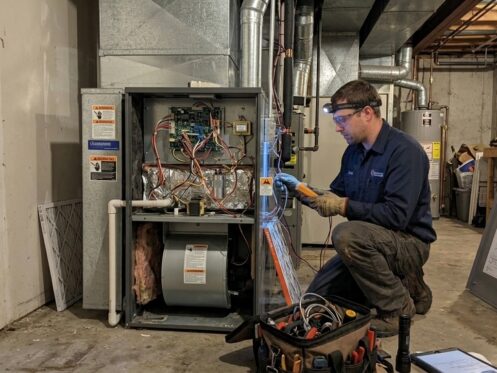
The technician must also consider the HVAC system’s configuration. Available installation space, airflow patterns, nearby materials, access panels, electrical requirements, and equipment design can affect where a UV light can be mounted.
Some materials may not be suitable for prolonged ultraviolet exposure. A professional should inspect nearby wiring, insulation, plastics, and other components before selecting the installation point. The UV light should also be installed so occupants cannot look directly at an operating lamp during normal system access.
System cleanliness is another consideration. Dust and debris can reduce the amount of UV energy reaching the target area. Lamps can also collect residue or lose effectiveness over time, so inspections and manufacturer-recommended maintenance remain important after installation.
What Should Be Evaluated Before Installation?
Before adding UV equipment, a professional should identify the property owner’s main concern. If the issue is dust, an upgraded filter or an inspection for air leaks may be more relevant. If the concern involves moisture or buildup around the indoor coil, UV light may be a useful supporting measure after the underlying conditions are evaluated.
An HVAC technician may examine:
-
The location and condition of the indoor coil and drain pan
-
Signs of moisture, drainage trouble, or surface buildup
-
The available space for proper lamp positioning
-
The system’s electrical and installation requirements
-
The condition of filters and other indoor air quality equipment
-
Whether surrounding materials can tolerate UV exposure
In other words, an HVAC UV light can be worthwhile for controlling microorganism buildup on selected surfaces, but it should be chosen for a defined purpose. Mokena, Illinois property owners can benefit from having the complete system inspected before deciding whether this technology fits their needs.
FAQ
Does an HVAC UV light remove dust from the air?
No. UV light targets certain microorganisms exposed to it, while HVAC filters are responsible for capturing dust, hair, and other airborne particles.
Where is a UV light typically installed in an HVAC system?
It is commonly positioned near the indoor coil or drain pan, where moisture may encourage microorganism buildup. Exact placement depends on the equipment design.
Can a UV light replace regular HVAC maintenance?
No. Filters, coils, drains, and other components still require appropriate inspection and maintenance. UV light is a supporting measure rather than a replacement.
Does every HVAC system benefit from UV light installation?
Not necessarily. Its value depends on the system’s condition, installation space, indoor air quality concerns, and whether the light can be positioned effectively.
Is it worth installing UV light in an HVAC system?
Installing a UV light in an HVAC system may be worthwhile when the goal is to help limit microorganism buildup on specific system surfaces. UV lights can support indoor air quality and HVAC cleanliness, but results depend on placement and system conditions. Mokena property owners should have the application professionally evaluated.
Conclusion
Installing UV light in an HVAC system may be worthwhile when the objective is to limit microorganism buildup on specific internal surfaces. Proper placement, suitable system conditions, and continued HVAC maintenance are essential to achieving useful results.
Allegiance Heating & Cooling can evaluate your HVAC system, discuss your indoor air quality concerns, and determine whether a UV light is appropriate for your Mokena property. Schedule a professional assessment to explore an installation suited to your equipment and goals.